QHSE & Sustainability:
Pallet Elastic supports responsible and compliant logistics
A rubber-based solution for your warehouse operations
Pallet Elastic offers industrial companies a practical way to reduce single-use plastic while meeting QHSE, ESG and regulatory requirements.
For a broader overview of plastic-free industrial palletisation challenges, visit our partner resource platform reduceplastic.eu.
For a broader overview of plastic-free industrial palletisation challenges, visit our partner resource platform reduceplastic.eu.
Why QHSE is a growing priority in industrial logistics
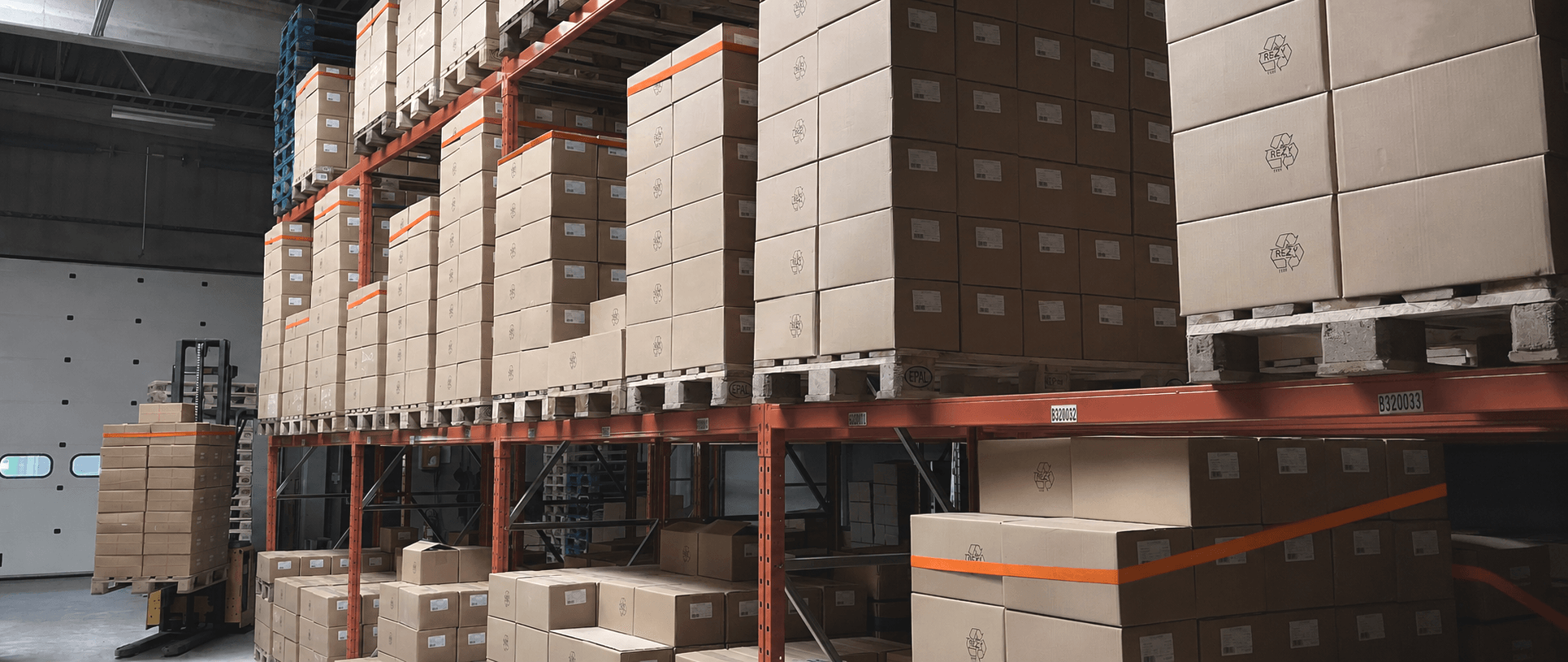
Replacing stretch film is no longer only an environmental goal. It has become an operational, economic, and compliance-driven necessity.
Companies handling hundreds of pallets daily generate kilometres of plastic waste and several tonnes of single-use material each year. This directly impacts operational costs, logistics efficiency, operator health, and regulatory compliance.
Companies handling hundreds of pallets daily generate kilometres of plastic waste and several tonnes of single-use material each year. This directly impacts operational costs, logistics efficiency, operator health, and regulatory compliance.
Key Regulatory Challenges for Warehouse Packaging
What is the PPWR and how does it affect pallet wrapping?
The Packaging and Packaging Waste Regulation (PPWR) sets ambitious targets for waste reduction, recyclability, and reuse across Europe. While certain exemptions apply to pallet wrapping and strapping, the overall pressure to reduce single-use plastics continues to increase.
How do AGEC and other European regulations impact logistics?
French AGEC law and broader EU initiatives encourage the transition from single-use to reusable solutions, particularly in internal and short-loop flows. Companies must anticipate stricter waste reporting and environmental performance requirements.
What is EUDR and why does it matter for pallet wrapping materials?
The EU Deforestation Regulation (EUDR) requires full traceability for natural-rubber-based products. As a mono-material natural rubber solution, Pallet Elastic is designed to support this traceability requirement, helping QHSE teams document raw material origin for ESG and audit purposes.
How can QHSE teams strengthen compliance and ESG performance?
Choosing reusable solutions like Pallet Elastic helps improve sustainability KPIs, simplify reporting, and demonstrate proactive environmental responsibility.
Operational and QHSE Challenges with Traditional Stretch Film
How to reduce plastic waste without increasing costs or complexity?
Stretch film generates significant recurring expenses (procurement, handling, waste management) and is rarely effectively recycled due to its multi-material composition.
How to improve operator safety and reduce MSD risks?
Repetitive film application and cutting increase the risk of musculoskeletal disorders. Removal remains largely manual and time-consuming.
How to prepare for stricter regulatory and audit requirements?
Anticipating PPWR, AGEC, EUDR, and broader ESG expectations is becoming essential to avoid future costs, penalties, and operational risks.
Pallet Elastic: A Credible QHSE-Compliant Solution
Key advantages for QHSE and sustainability teams
Transparent limitations
Measurable QHSE & Economic Benefits
-1,000h
handling time saved per year
-5 tonnes
plastic waste avoided per year
-€15,800
total cost savings per year
Based on real operations (50 pallets/day), switching from stretch film to Pallet Elastic delivers clear annual gains:
Application time drops from 60–90 seconds per pallet to just 5–10 seconds, saving roughly 1,000 hours of handling time per year.
Waste generation falls from 400–800g of film per pallet to zero, avoiding around 5 tonnes of plastic waste annually.
Combined, this translates into approximately €15,800 in total cost savings per year, alongside stronger ESG reporting, reduced waste management, improved operator ergonomics, and audit readiness.
Application time drops from 60–90 seconds per pallet to just 5–10 seconds, saving roughly 1,000 hours of handling time per year.
Waste generation falls from 400–800g of film per pallet to zero, avoiding around 5 tonnes of plastic waste annually.
Combined, this translates into approximately €15,800 in total cost savings per year, alongside stronger ESG reporting, reduced waste management, improved operator ergonomics, and audit readiness.
Ready to evaluate a solution that supports your QHSE objectives?

Pallet Elastic is an industrial load containment solution designed and supported by Nico.be specialist in elastic solutions
Site Index
Warehouse Applications
Internal Pallet Handling
Order Picking Operations
Shipment Preparation
Warehouse & Long-Term Storage
Order Picking Operations
Shipment Preparation
Warehouse & Long-Term Storage